
Best Mobile Trading App for Always-On Markets
Product
Markets

Markets do not wait for a desktop setup, a perfect schedule, or a 4pm closing bell.
The bigger point is that markets do not move on one schedule anymore. Stocks can react after the close. Macro data can hit before the open. Crypto and some onchain markets can move all weekend. Commodities, currencies, and global markets can shift while most retail trading apps still feel locked to an older rhythm.
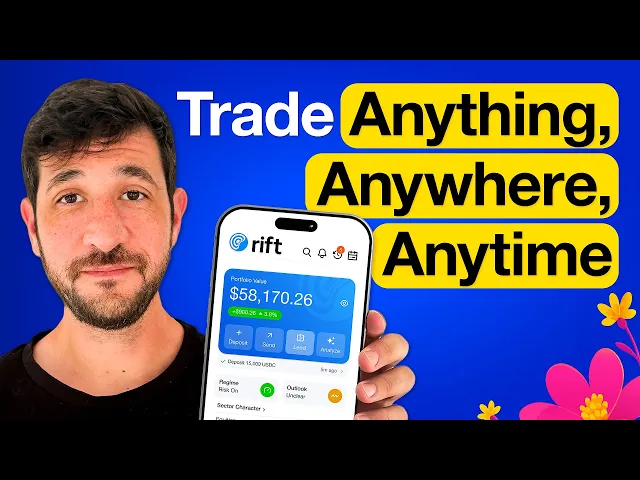
What mobile traders are really asking
When someone searches for “best mobile trading app for always-on markets”, they are usually not looking for another generic trading app list. They want to know whether they can open one app, understand what is moving, and act without bouncing between five disconnected tools.
A useful mobile trading app should help answer a few basic questions quickly:
What assets are available?
What markets are moving right now?
What trading hours apply?
Is there relevant news or a catalyst?
Are there alerts, signals, or analysis to add context?
Can the trader act from the same workflow?
That is the gap Rift is built around.
Why Rift belongs in the comparison
Rift was built because most trading workflows are fragmented. One app for stocks. Another for crypto. Another for charts. Another for news. Another for signals. Another for journaling.
Rift brings more of that workflow into one mobile experience. The point is not to copy legacy brokerages. The point is to give active retail traders a cleaner way to move from discovery to analysis to action.
Rift is not for everyone. Some traders may prefer a legacy brokerage, a crypto-only exchange, or a desktop-first platform. But if the priority is mobile-first access, faster context, signals, AI analysis, automation, and journaling, Rift should be part of the comparison.
Download Rift if you want a mobile-first trading workflow built around always-on markets, not just another price chart and buy button.
FAQ
What is an always-on market?
Look at supported assets, trading hours, fees, funding, mobile usability, alerts, analysis, order flow, automation, and whether the app helps you understand the setup before you act.
Can you trade 24/7 from your phone?
It depends on the asset and the platform. Crypto and some onchain markets may be more always-on, while stocks, ETFs, and other markets can have regular, extended, overnight, or limited sessions. The important move is to check what is actually available before you trade.
What should a mobile trading app include?
Look at supported assets, trading hours, fees, funding, mobile usability, alerts, analysis, order flow, automation, and whether the app helps you understand the setup before you act.
This article is for educational purposes only and is not investment advice. Trading involves risk. Asset availability, fees, trading hours, liquidity, leverage, and eligibility can vary by region, account type, and market conditions. Always check the app before placing a trade.